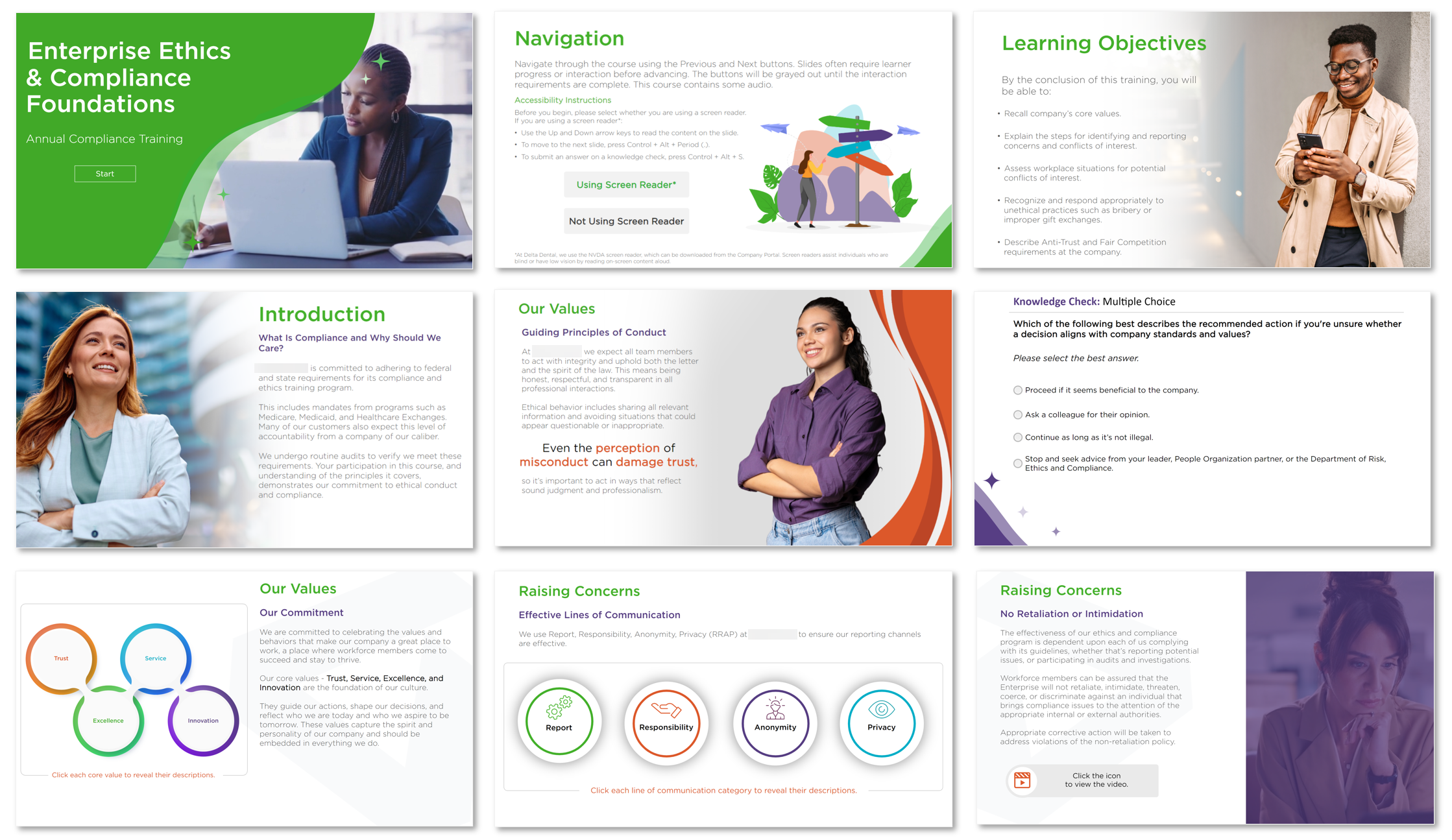
Enterprise Ethics and Compliance Foundations - eLearning - Storyline
The Problem:
Annual enterprise compliance training was heavily content-driven, relying primarily on long videos with very little interaction or application. It was long and dry, making it difficult for employees to stay engaged or apply ethical and compliance principles to real-world decisions they faced on the job. Employees often viewed the training as a required checkbox rather than a meaningful learning experience, while the content still needed to meet strict regulatory requirements.
My Role:
As senior instructional designer and project lead, I led the full redesign of the Enterprise Ethics and Compliance Foundations training. I owned the project end-to-end, coordinating with a team of instructional designers while managing stakeholders, SMEs, QA, contractors, and the LMS team.
My Thinking:
I believed we could dramatically improve outcomes by moving away from passive content delivery to active, scenario-based learning. I redesigned the course so employees would engage with realistic workplace scenarios that mirrored the actual decisions they make every day. This allowed them to practice applying compliance and ethical principles in context while still fully meeting all regulatory requirements.
I introduced clear learning objectives, modern visual standards, and improved accessibility. I also identified and removed content redundancies and inefficiencies to make the training more concise and focused. As project lead, I set clear timelines, assigned work across the team, and ensured all courses were delivered on schedule for the annual rollout.
The Outcome:
Reduced compliance training time by 17% (25 minutes) by streamlining content and optimizing instructional design, delivering a more engaging, accessible, and scalable compliance program without sacrificing regulatory integrity. The redesign improved learner engagement and satisfaction, increased consistency across compliance offerings, and enabled smoother annual rollouts through clear, structured timelines. A scenario-based approach further strengthened employees’ ability to connect compliance concepts to their daily work.