New Hire Program - Blended Learning
The Problem:
The existing Grievances and Appeals new hire program was a fragmented 5-week experience serving seven different roles. Although the roles shared some similarities, they differed significantly in daily responsibilities, systems used, and required skill levels. This created confusion for both new hires and facilitators, inconsistent learning outcomes, duplicated effort in the same classroom, and delayed readiness once new hires moved to the floor.
My Role:
As the lead instructional designer, I owned the end-to-end redesign of the G&A New Hire program. I managed the project from needs analysis through curriculum development, pilot execution, evaluation, and final handoff.
My Thinking:
I recognized that simply updating existing materials would not solve the core issues. I redesigned the Grievances and Appeals new hire program into a more efficient 4-week blended curriculum that included 16 targeted courses and a final assessment. A major focus of the program was helping new hires master the Pega SaaS platform used for claims and account processing.
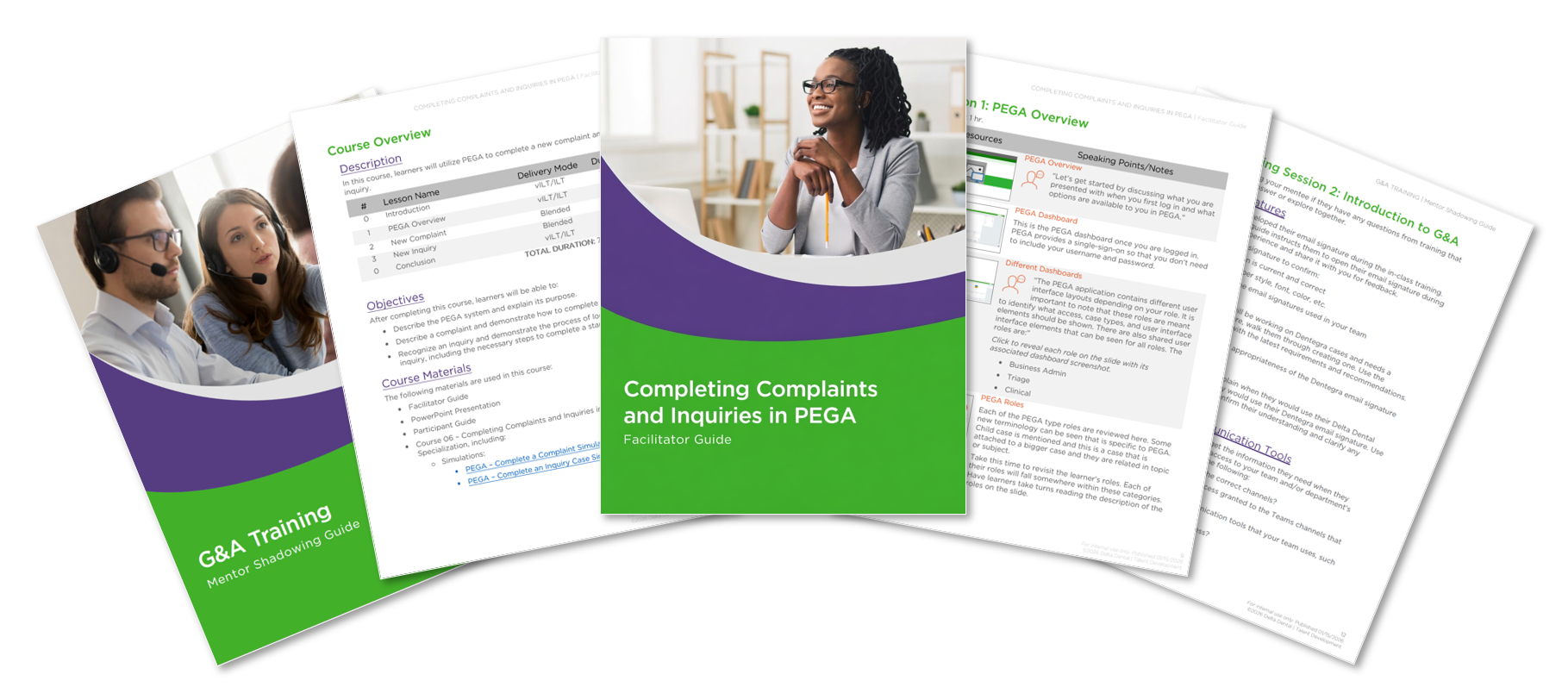
To bridge the gap between classroom learning and real-world application, I led the development of a comprehensive blended learning solution that combined Storyline simulations of Pega workflows, Rise courses, facilitator and participant guides, PowerPoint decks for classroom delivery, job aids, and detailed Shadowing Guides for mentors.
A key component of this new hire program was the introduction of a structured shadowing program. New hires periodically left the classroom to work with an assigned mentor on the floor. Detailed Shadowing Guides were developed to review exactly what was covered in class and help mentors quickly prepare using real-life account examples they were already working on that day. This made preparation minimal for mentors while giving new hires immediate, relevant practice. New hires then returned to the classroom for structured debriefs, reinforcing learning through real application.
I partnered closely with operations leaders, SMEs, QA, contractors, and the LMS team throughout the process to ensure the curriculum was practical, scalable, and sustainable.
The Outcome:
The redesigned program significantly improved new hire readiness and confidence. It delivered a 58% knowledge gain, a 97% average assessment score, and facilitator ratings increased from 4.6 to 4.9 out of 5. The structured shadowing component reduced onboarding confusion and accelerated the transition to productive work on the floor. The new framework also created a repeatable, maintainable model for future cohorts and strengthened training’s reputation as a strategic business partner.